
Beyond the Lungs: How Tobacco Impacts Your Mental Health Medication
While the respiratory and cardiovascular risks of smoking tobacco are widely known, the impact it has on psychiatric treatment is a more silent, lesser known interaction. At Desert Clover Psychiatry, we believe in treating the whole person. This means understanding that what you put into your body can significantly change the way your brain processes mental health medications.
For many of our clients, managing tobacco use isn’t just about physical health, it’s a critical component of achieving stability in their medication strategy.
The Liver’s "Speed Boost"
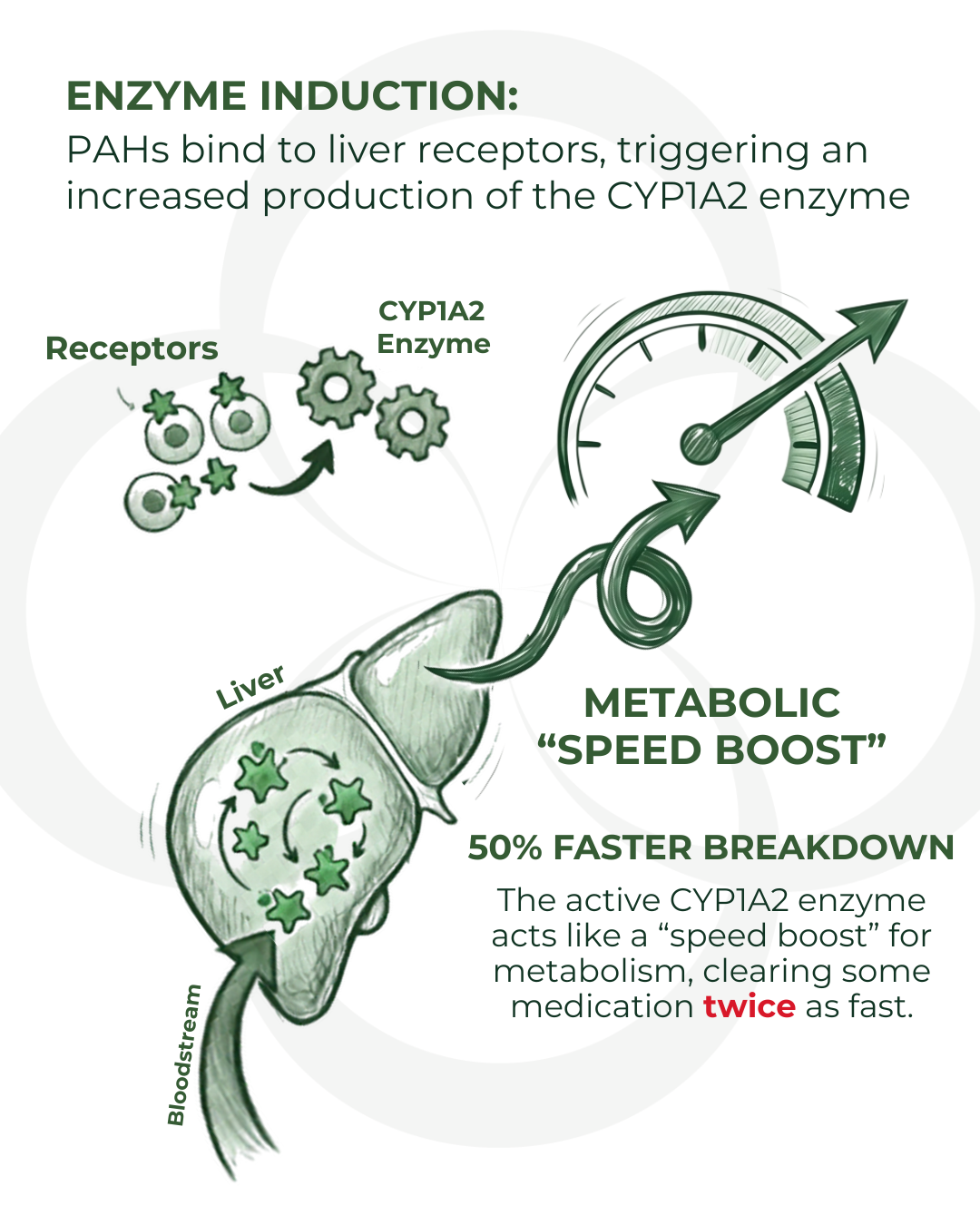
Many clients are surprised to learn that it isn’t the nicotine itself that interferes with treatment, but rather the chemicals produced by burning tobacco.
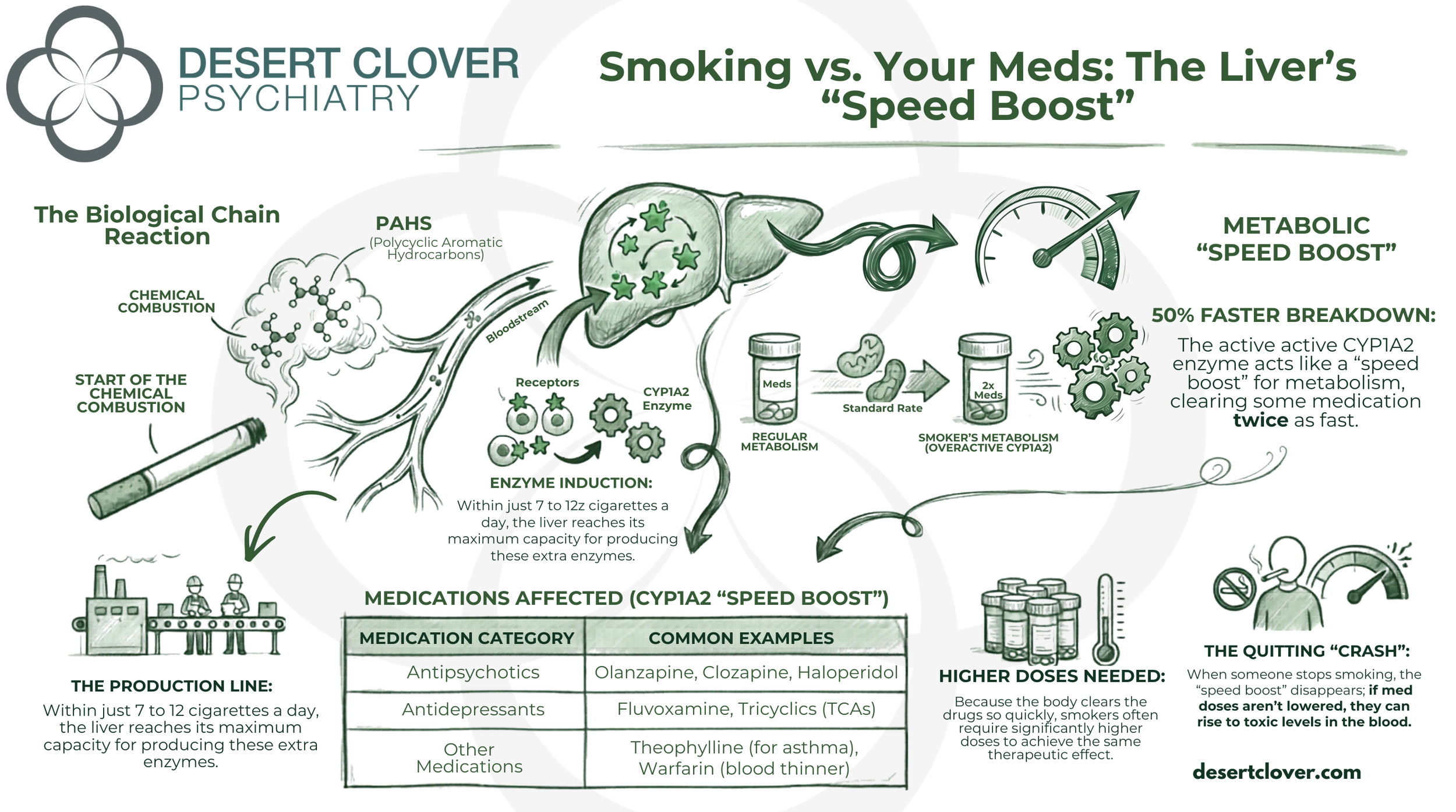
When you smoke cigarettes, you inhale polycyclic aromatic hydrocarbons (PAHs). These chemicals induce an enzyme in your liver called CYP1A2. When this enzyme becomes overactive due to smoking, it acts like a "speed boost" for your body's metabolism.
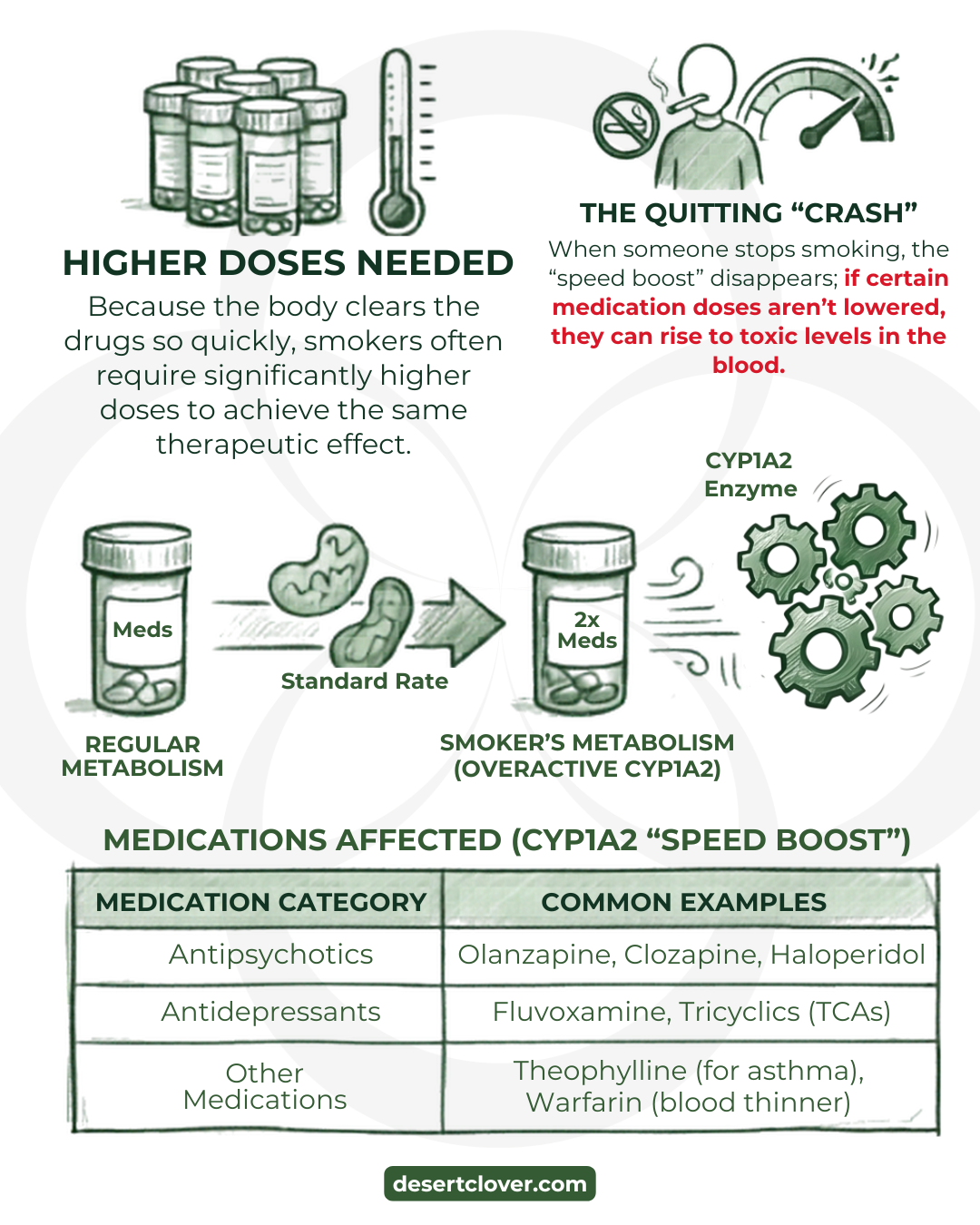
As a result, your liver breaks down certain psychiatric medications, including olanzapine, clozapine, and several common antidepressants, up to 50% faster than normal. This rapid breakdown often leads to a "subtherapeutic" state. In plain terms, your body clears the medication before it has a chance to work, leaving you feeling like your treatment is ineffective.
What About Vaping or Nicotine Replacement?
Because the CYP1A2 enzyme is triggered by the smoke of combustible tobacco and not the nicotine itself, using nicotine replacement therapies (like patches or gums) or e-cigarettes generally does not speed up the metabolism of these medications in the same way. However, vaping carries its own set of health risks, and nicotine is still a highly addictive stimulant that can impact anxiety and sleep.
The Hidden Risk of Quitting Cold Turkey
Deciding to quit smoking is one of the best choices you can make for your overall health, but it requires careful coordination with your psychiatric provider.
If your medication dosage was calibrated while you were a smoker, your body is used to metabolizing it quickly. If you abruptly stop smoking, your liver's CYP1A2 enzyme activity will slow down to a normal rate. Without the "speed boost," the medication will stay in your system longer, which can cause the medication levels in your bloodstream to spike. This can lead to unexpected and sometimes severe side effects or toxicity.
Partnering for Success
Managing nicotine addiction is a journey, and you don't have to navigate the biochemical complexities alone. Before you change your smoking habits, whether you are cutting back, quitting, or switching to nicotine replacement, it is vital that you consult with your psychiatric provider.
At Desert Clover Psychiatry, we integrate specialized cessation support into our standard clinical care. If you are a current, or future client, talk with your Provider during your next visit. We can help you safely adjust your medication dosages as you transition and provide the evidence-based behavioral tools you need for long-term health and stability.