
Men’s Mental Health: When Depression Looks Like Anger, Stress, or Withdrawal.
June is widely recognized as Men’s Health Month. It is a vital window to talk openly about the challenges men face, dismantle old stigmas, and bring clinical clarity to struggles that often go unnoticed.
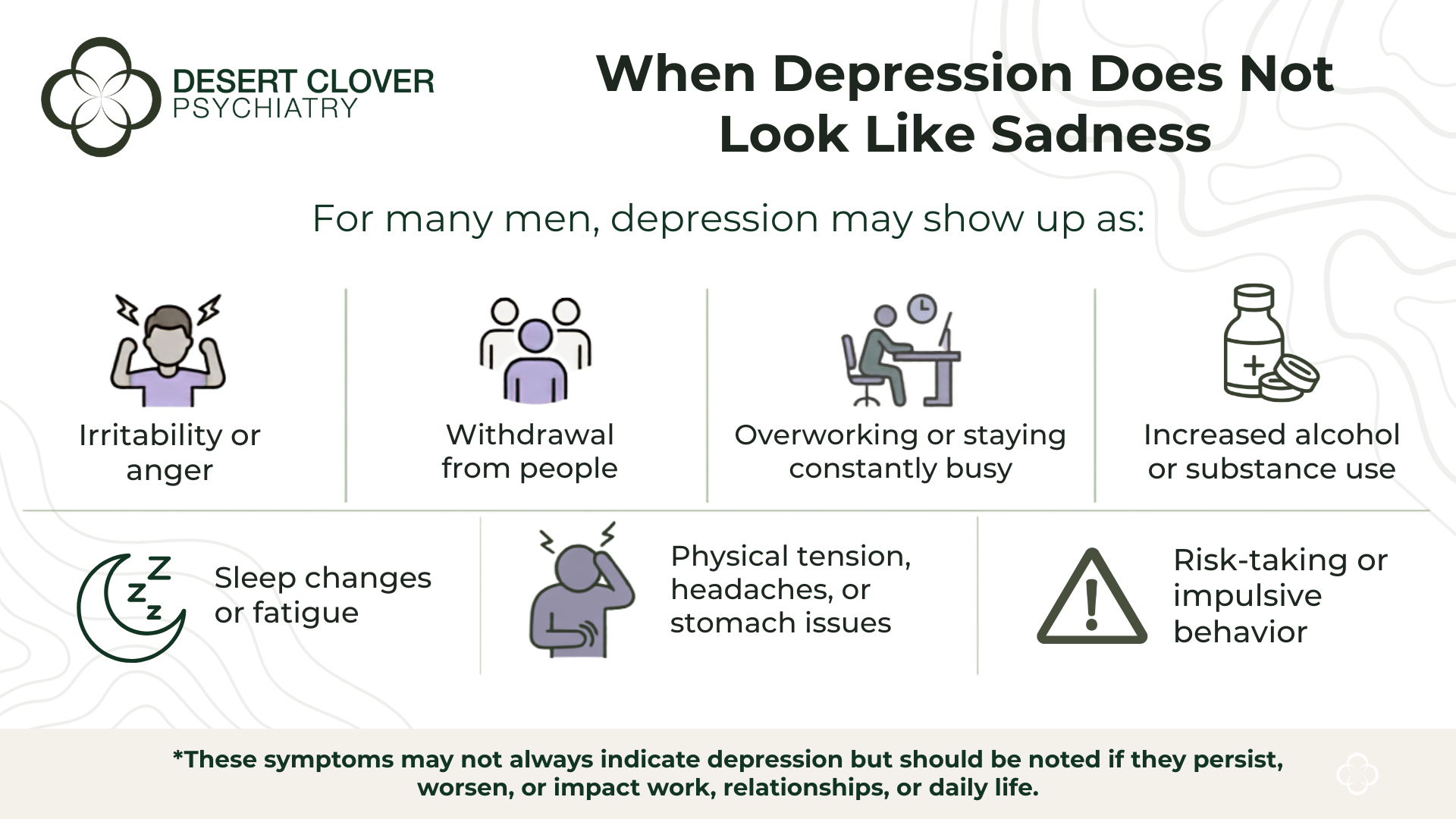
WHY? For many men, depression may look less like sadness and more like irritability, shutdown, overwork, drinking, sleep problems, or physical tension.
Historically, cultural expectations of masculinity have encouraged emotional stoicism, self reliance, and physical resilience. Common phrases like "man up" or "tough it out" aren't just harmless sayings; they are early training that teaches boys and men to internalize emotional pain.
Strength can look practical. Taking care of your mental well-being, scheduling a psychiatric evaluation, and being honest about internal struggles are active steps toward stability, resilience, and a life that can be maintained over time.
The Care Gap: Looking at the Numbers
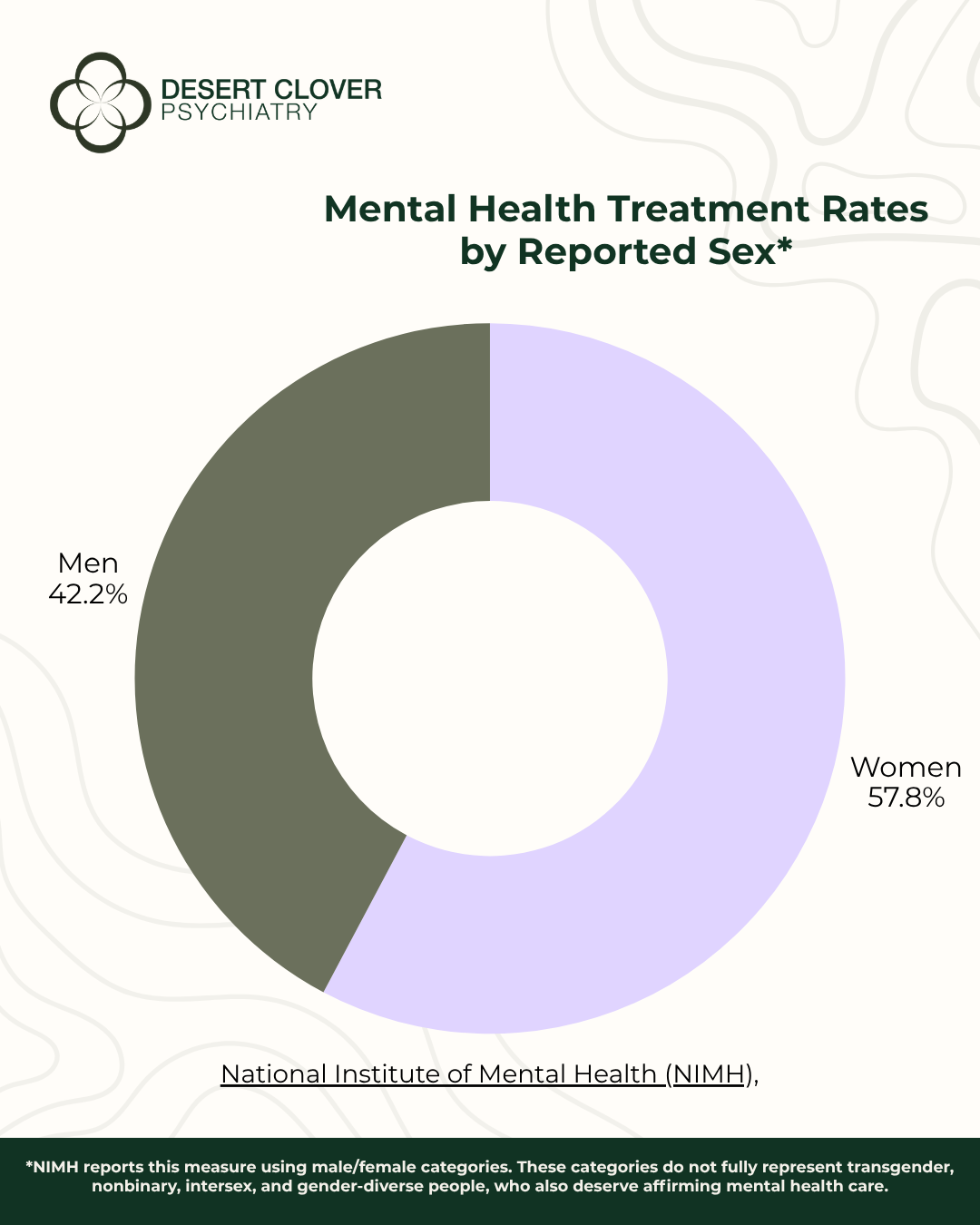
While mental health challenges like depression and anxiety affect everyone, the rate at which men seek professional treatment is significantly lower than for women. According to data from the National Institute of Mental Health (NIMH), among U.S. adults with any mental illness in 2022, only 41.6% of males received mental health treatment compared with 56.9% of females. It’s important to note, NIMH reports this measure using a simplified binary statistic model of male/female categories. These categories do not fully represent transgender, nonbinary, intersex, and gender-diverse people, who also deserve affirming mental health care.
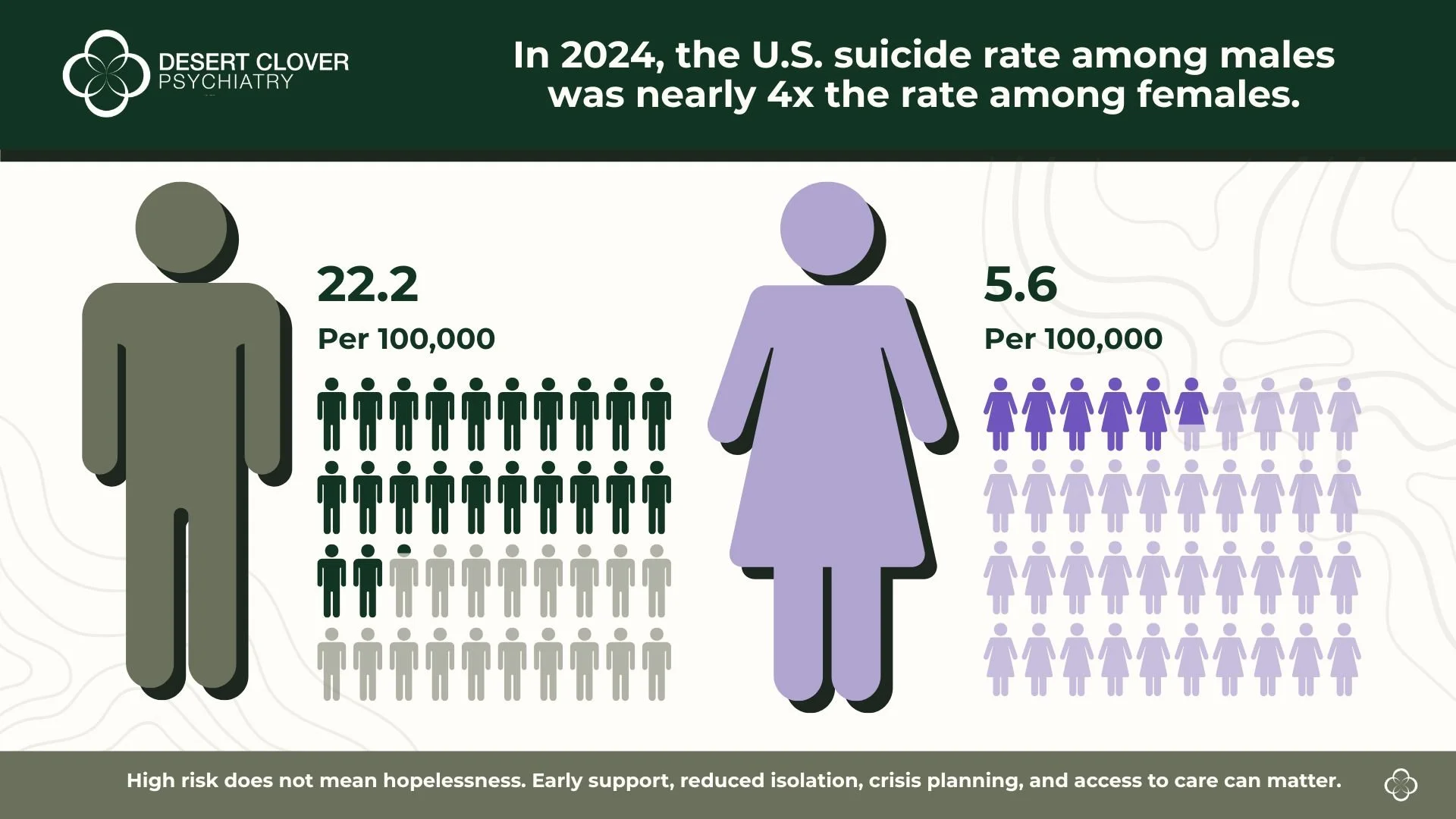
This care gap has serious consequences. The Centers for Disease Control and Prevention (CDC) reports that the male suicide rate in 2024 was nearly four times higher than the female rate, with suicide causing 48,824 deaths that year. These statistics point to a clear reality: mental distress in men is frequently underdiagnosed, and left untreated until it becomes a crisis.
Spotting the Signs: How Distress Uniquely Manifests in Men
To help close this care gap, psychiatric research focuses on how depression presents differently in men. A landmark study published called “The Experience of Symptoms of Depression in Men vs Women” demonstrated that when alternative, external symptoms are factored into clinical assessments, the observed gender gap in depression rates narrows significantly. Men reported higher rates of anger, aggression, substance use, and risk taking, showing that depression rates look very different when we include these behaviors.
To help clinicians and families recognize these patterns, researchers developed screening tools like the Male Depression Risk Scale (MDRS-22). This tool measures six key domains where male distress typically shows up:
1. Anger and Aggression
Instead of displaying quiet sadness, men dealing with depression often show a low threshold for frustration, unprovoked anger, or sudden outbursts. A clinical study by Winkler et al. (2005) published in Psychotherapy and Psychosomatics established that depressed male patients experienced significantly more frequent and severe anger attacks and lower impulse control than female patients.
2. Somatic Symptoms (Physical Complaints)
Men are highly prone to translating psychological pain into physical symptoms. These physical complaints often include:
Unexplained Physical Pain, like chronic headaches, back pain, joint aches, or persistent digestive issues without a clear medical cause.
Insomnia or sleeping excessively as a way to avoid stress.
A deep, ongoing exhaustion that doesn't improve with rest.
3. Drug and Alcohol Use (Self Medicating)
To cope with heavy emotional pressure or anxiety, men often turn to substances. This can look like drinking more alcohol than usual, relying on recreational drugs, or misusing prescription medications to dull emotional pain or worry.
4. Risk Taking Behavior
Underlying distress can drive reckless habits. This might include unsafe driving, risky financial decisions, or engaging in high hazard physical activities as a way to release internal tension or feel in control.
5. Emotion Suppression
Many men work hard to keep their feelings tightly under wraps. This emotional restriction can make them appear numb, distant, or cold to their loved ones, even when they are struggling deeply inside.
6. Social Isolation and Escape Habits (The Workaholic Trap)
Men often hide their psychological struggles by throwing themselves entirely into acceptable daily distractions. An extreme over commitment to work (workaholism), obsessive physical training, or endless gaming are common ways to avoid facing emotional distress. At the same time, they may quietly pull away from partners, family, and friends.
Understanding the Roadblocks: Why Men Avoid Care
Identifying symptoms is only part of the solution; we also have to understand why men hesitate to ask for help. A study published in BMC Psychiatry (2020) analyzed men experiencing moderate-to-severe depression. The researchers found that despite high rates of distress, only 8.5% of the men were currently using professional mental health support.
The study showed that attitudinal barriers are far more predictive of men avoiding care than structural barriers like cost or scheduling.
The three primary mental blocks identified were:
A deeply held belief that "I should be able to fix my own problems" without help.
Extreme discomfort with verbally admitting emotional struggles to a doctor or therapist.
Uncertainty about how psychiatric or therapeutic care works, which often leads to skepticism.
Conclusion: Strength in Taking Action
Men’s mental health concerns are common, treatable, and often missed when symptoms do not look like sadness. Irritability, withdrawal, overwork, substance use, sleep changes, physical tension, and risk-taking can all be signs that stress, depression, anxiety, or trauma need closer attention.
Men’s Health Month is a useful annual reminder to check in on ourselves and the men in our lives, but mental well-being is not limited to one month. It is part of ongoing health care. Taking care of your psychological health is not a sign of defeat or weakness. It is a practical act of self-respect, partnership, and responsibility. When you address your mental health, you also support your relationships, your work, and the people who rely on you.
Seeking help does not require a crisis. It can begin with an honest conversation, a screening, a therapy referral, a primary care visit, or a psychiatric evaluation. The right starting point depends on the person, the symptoms, and the level of concern.
At Desert Clover Psychiatry, we approach men’s mental health with clinical clarity, respect, and practical support. Our goal is to help clients better understand what they are experiencing, identify appropriate treatment options, and take the next step in care when support is needed.
We also recognize that we may not be the right starting point for everyone. Some people may begin with a support group, a national helpline, a primary care provider, a therapist, or another trusted local resource. To support that process, we have created a reference page with mental health resources and national directories, including support groups, helplines, and crisis networks.
Whether the next step is adjusting daily habits, starting a conversation with someone you trust, or connecting with a healthcare professional, taking action matters. If you or someone you care about may be struggling, consider reaching out for professional guidance. If there is immediate danger, thoughts of suicide, or concern that someone may not be safe, call 911 or call or text 988 for the Suicide & Crisis Lifeline.
If you or someone you care about is struggling, consider reaching out for professional guidance. If there are thoughts of suicide, or concern that someone may not be safe, call 911 or call or text 988
For men in Phoenix and across Arizona, support can begin with a psychiatric evaluation, or therapy referral. If you are ready to take the next step with us, our expert clinical team at Desert Clover Psychiatry is here to provide the grounded care you’re ready for.
FAQ: Evidence Based Answers on Men's Mental Health
-
Temporary stress is typically tied to a specific, acute trigger (like a work deadline). According to clinical diagnostics, if you experience persistent irritability, anger outbursts, fatigue, or sleep disturbances for more than two consecutive weeks, and they interfere with your daily life or relationships, it is time to consult a psychiatric professional.
-
Your initial evaluation is a collaborative, pressure-free dialogue. A licensed provider will review your medical history, somatic physical symptoms, current lifestyle stressors, and long-term personal goals to build a customized, objective treatment roadmap.
-
Avoid using diagnostic labels or confrontational language. Instead, frame your observations around physical, tangible symptoms (e.g., "I've noticed you aren't sleeping well and have been carrying a lot of tension, and I want to support you."). Normalize professional care as an active, performance-enhancing tool for overall life stability.
-
While regular exercise has a robust, evidence-backed antidepressant effect, demonstrating large treatment effects for moderate-to-vigorous aerobic activity, clinical guidelines advise that physical exercise is most effective as an adjunct therapy, particularly for moderate-to-severe clinical depression. Depression can involve biological, psychological, social, and medical factors, so exercise may help but may not fully address the condition on its own. A psychiatric evaluation remains crucial to determine if structured medical intervention or targeted psychotherapy is required alongside active physical habits.
-
Clinical evidence suggests that high conformity to traditional masculine norms (such as intense self-reliance and emotional restriction) can negatively influence help-seeking behaviors and treatment retention. Men who adhere strictly to these norms may prematurely discontinue treatment or withhold critical symptom details from their healthcare providers. To counter this, our providers at Desert Clover Psychiatry utilize a collaborative, objective, and strengths-based treatment approach that reframes psychiatric care as a strategic, active skill for life management and personal baseline optimization rather than a passive or vulnerable state.
-
Yes, there is a complex, overlapping relationship. Hypogonadism (low testosterone) often presents with symptoms like fatigue, low mood, irritability, loss of muscle mass, and cognitive fog, which closely mimic clinical depression. Aa systematic review and meta-analysis found evidence suggesting that testosterone replacement therapy can have an antidepressant effect, specifically in hypogonadal populations. Because these conditions can co-occur, a comprehensive psychiatric evaluation is essential to accurately diagnose whether symptoms are endocrine-driven, psychiatric, or a combination of both, ensuring patients receive correct, targeted clinical care.
Peer Reviewed References
Martin, L. A., Neighbors, H. W., & Griffith, D. M. (2013). The influence of gender-atypical symptoms on the diagnosis of depression in men. JAMA Psychiatry, 70(10), 1090-1099.
Rice, S. M., Fallon, B. J., Aucote, H. M., & Möller Leimkühler, A. M. (2013). Development and preliminary validation of the Male Depression Risk Scale (MDRS-22). Journal of Affective Disorders, 151(3), 950-958.
Winkler, D., Pjrek, E., & Kasper, S. (2005). Anger attacks in depression evidence for a male depressive syndrome. Psychotherapy and Psychosomatics, 74(5), 303-307.
Oliffe, J. L., Rossnagel, E., Seidler, Z., & Rice, S. M. (2019). Men's depression and suicide: A review of recent evidence. Current Psychiatry Reports, 21(9), 1-8.
Herreen, D., Rice, S., Currier, D., Schlichthorst, M., & Zajac, I. (2020). Men’s help seeking for depression: Attitudinal and structural barriers in symptomatic men. BMC Psychiatry, 20(1), 1-10.
Ulrich, R. S., Simons, R. F., Losito, B. D., Fiorito, E., Miles, M. A., & Zelson, M. (1991). Stress recovery during exposure to natural and urban environments. Journal of Environmental Psychology, 11(3), 201-230.
Hunter, M. R., Gillespie, B. W., & Chen, S. Y. P. (2019). Urban nature experiences reduce stress in the context of daily life based on salivary biomarkers. Frontiers in Psychology, 10, 722.
Yin, J., Zhu, S., MacNaughton, P., Laurent, J. G. C., & Spengler, J. D. (2020). Physiological and cognitive performance of biophilic design in indoor environments. Building and Environment, 166, 106402.
Schuch, F. B., Vancampfort, D., Richards, J., Rosenbaum, S., Ward, P. B., & Stubbs, B. (2016). Exercise as a treatment for depression: A meta analysis adjusting for publication bias. Journal of Psychiatric Research, 77, 42-51.
Seidler, Z. E., Dawes, G. L., Rice, S. M., Oliffe, J. L., & Dhillon, H. M. (2016). The role of masculinity in men's help seeking for depression: A systematic review. Clinical Psychology Review, 49, 106-118.
Zarrouf, F. A., Artz, S., Griffith, J., Sirbu, C., & Kommor, M. (2009). Testosterone and depression: Systematic review and meta analysis. Journal of Psychiatric Practice, 15(4), 289-305.