
How Do I Know If My Psychiatric Medication Is Helping?

You start a psychiatric medication hoping something will get easier. But when your prescriber asks, “How are you feeling?” the answer may not be straightforward. Some days feel better than others, and the changes you notice may be hard to put into words. Think of it as the difference between weather and climate: how you feel today is only one part of the picture; the pattern over time helps you understand what may be changing.
At your follow-up, you and your prescriber can look at that bigger picture together: your symptoms, the parts of everyday life that matter to you, and any side effects or trade-offs. You don’t need a polished explanation. A few specific examples of what feels easier, what remains difficult, or what concerns you can help you decide together what comes next.
Start with what you want to improve
“Feel better” is a reasonable hope, but it can hard to measure. Ask your prescriber which symptoms the medication is intended to address and what meaningful improvement might look like for you.
Your goals might sound like these:
“I want worry to take up less of my evening.”
“I want to follow a conversation without losing track.”
“I want to enjoy time with people again.”
“I want fewer mood episodes that disrupt my life.”
These are examples, not a checklist everyone should meet. A medication may be intended to ease current symptoms, help prevent symptoms from returning, or both. Clarifying its purpose makes a follow-up appointment more useful to your prescriber, and empowers your insight.
Notice what is changing in everyday life
Try comparing your experience with how things were before the medication or most recent prescribed change. Are the symptoms less frequent, less intense, or easier to recover from? What remains difficult?
Then consider daily life. Perhaps you are returning calls, eating more regularly, or finding it easier to be present with your family. Maybe you still feel anxious, but a routine errand no longer consumes your whole day. Those details give “a little better” some meaning.
Progress is not measured only by getting more done. Rest, connection, enjoyment, and basic self-care count too. One unusually good or difficult day may not capture the overall pattern. Your prescriber can help interpret changes alongside sleep, stress, physical health, and other parts of treatment.
Ask about the time frame for your medication
Psychiatric medications do not all work on the same schedule. Some effects may appear quickly; others develop more gradually. Even with one medication, different symptoms may change at different times. [1]
Ask: “What should we look for first, and when should we review whether this is helping?” The answer depends on the medication, the reason it was prescribed, and your individual situation.
Keep the follow-up plan even if you are unsure anything has changed. You do not need to wait for a dramatic result before reporting what you notice. If symptoms worsen or side effects concern you, contact your prescriber sooner rather than waiting out an assumed trial period.
Keep a small record that you can actually use
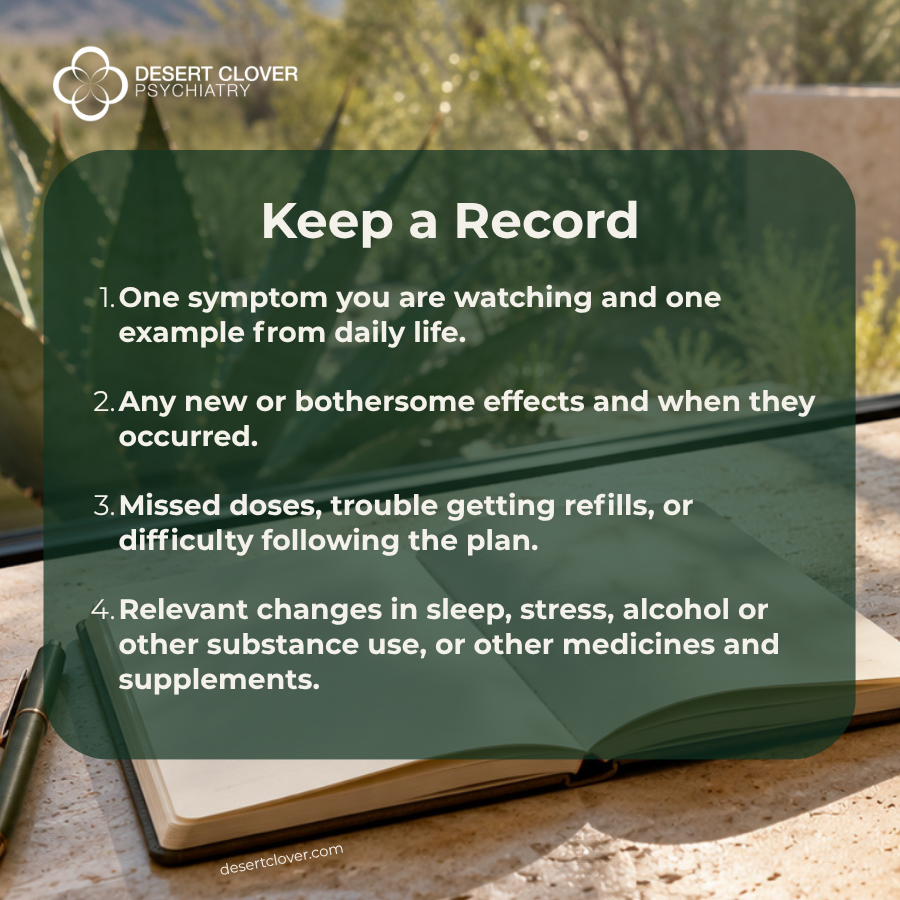
By the time a follow-up appointment arrives, it can be hard to remember how you felt two weeks ago or when a particular change began. A few brief notes help you bring concrete examples into the conversation: what is improving, what remains difficult, and what deserves attention. Looking back across several check-ins can put an unusually good or difficult day in perspective, making it easier to discuss possible benefits, side effects, and other factors that may be affecting how you feel. You do not need a detailed daily journal. A phone note or paper list, updated at an interval you agree on with your prescriber, can help you spend less of your appointment trying to remember and more of it discussing what matters to you.
REMEMBER: This is a conversation aid, not a test.
It is important to remember that this record is intended to be a supportive conversation aid, not a clinical test or a rigid requirement. You are not expected to record every passing emotion or hyper-monitor your internal state throughout the day. In fact, if the act of tracking your symptoms increases your anxiety or creates additional stress, please let your provider know; they can often suggest a simpler, more manageable approach that suits your specific needs. While your clinician may utilize standardized questionnaires to gauge progress, your personal, lived experience remains the most vital piece of information you can bring to your appointment. Your observations are the foundation upon which effective treatment decisions are built.
Include side effects in the conversation
Benefit and side effects deserve attention together. Less anxiety may matter a great deal, while daytime sleepiness may still interfere with driving or work. Changes in appetite, sexual functioning, sleep, or how emotionally connected you feel are worth mentioning, even if they seem awkward.
Describe the effect, when it happens, and what it prevents you from doing. “I feel sleepy” is useful; “I am too drowsy to drive safely in the morning” is more specific. Do not drive when you feel impaired.
You do not have to decide on your own whether a change comes from medication, the condition being treated, or something else. Bring the observation. Ask which effects may settle, which need prompt attention, and what options exist if the trade-off is not acceptable. Some medications also require physical checks or laboratory monitoring that you cannot replace by tracking how you feel.
Bring questions as well as observations
Before the visit, choose the two or three things you most want to discuss. You might ask:
“Is this the kind of improvement we were aiming for?”
“What should we do about the symptoms that are still getting in the way?”
“How do the benefits compare with these side effects?”
“When should I contact you before the next appointment?”
Be open with your provider about the real-world stuff, like if you’re struggling with insurance, money, or just life getting in the way of taking your medication. Being honest about what’s actually happening helps them figure out if your treatment plan is really working or if these outside factors are getting in the way.
Also, keep a solid list of your meds and supplements handy to help your doctor avoid any bad interactions. Talk with your prescriber before changing your dose or stopping medication, even if you feel better; you can unintentionally create worse outcomes by “going off script” with your medications. Always talk through any changes with your provider first so you can stay on track safely.
Know when not to wait
Contact your prescriber immediately if you notice worsening symptoms or troubling side effects. Also report any, unusual increase in energy or impulsivity, especially with much less need for sleep. Feeling unusually energized is not always a sign of recovery.
For suicidal thoughts or emotional crisis in the United States, call or text 988 for immediate support. If you may act on those thoughts, cannot stay safe, or have a life-threatening reaction such as trouble breathing, call 911 or go to the nearest emergency room. Do not wait for a routine office reply.
Your experience shapes what comes next.
You don’t need to have everything figured out to take the next step. What feels better, what still bothers you, and what you want from treatment are all worth discussing. Bring your observations and questions to Desert Clover Psychiatry, and work with your provider to understand your progress and decide what comes next.
Sources and Refrences
1. NIMH • Mental Health Medications
https://www.nimh.nih.gov/health/topics/mental-health-medications
2. FDA • Depression Medicines
https://www.fda.gov/consumers/womens-health-topics/depression-medicines
3. NICE • Depression in adults treatment and management
https://www.nice.org.uk/guidance/ng222/chapter/Recommendations
4. NIMH • Tips for Talking With a Health Care Provider About Your Mental Health
https://www.nimh.nih.gov/health/publications/tips-for-talking-with-your-health-care-provider
5. NIMH • Bipolar Disorder
https://www.nimh.nih.gov/health/publications/bipolar-disorder
This article and its resources are general education and does not replace advice from your own prescribing clinician.