The Need to Mark Time: Why Holidays Matter to the Mind (And Why They Can Still Hurt)
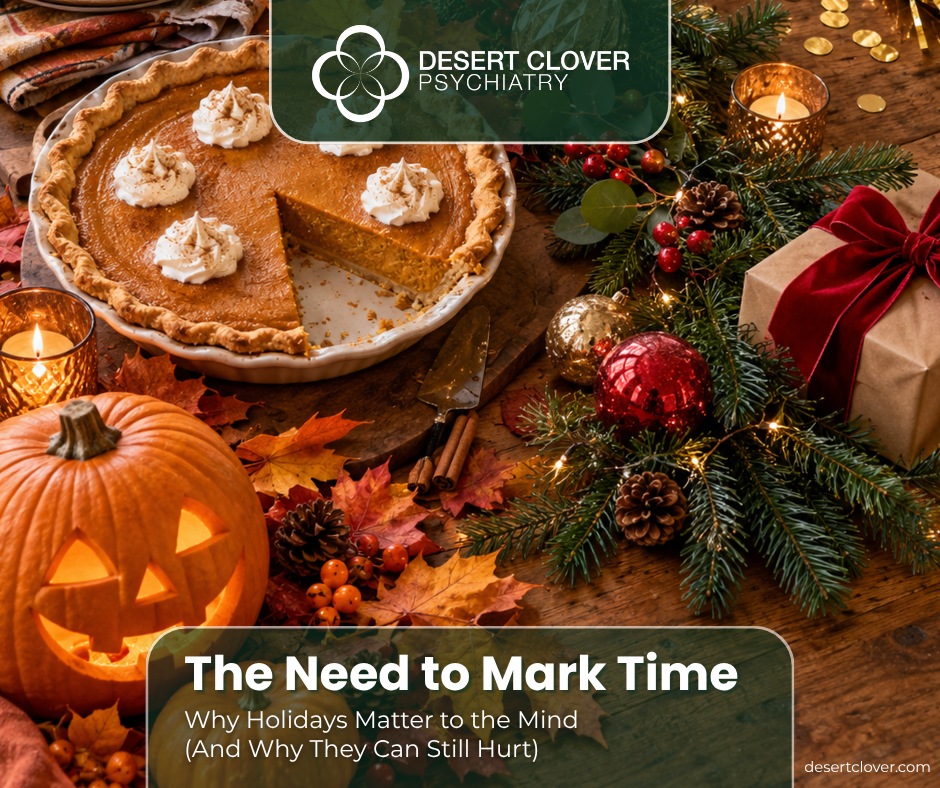
Every year as October begins, the physical landscape quietly resets. Storefront windows pack away summer displays in favor of warm, earthy palettes, strings of lights appear across neighborhood eaves, and offices bring out bins of seasonal decor that have spent the past eleven months hidden in storage. There is an unmistakable shift in the air, a shared cultural signal that another year is drawing to a close.
Marking this seasonal turn is among the oldest human impulses. For thousands of years, communities have built fires in the cold, prepared specific seasonal foods, and gathered around recurring milestones to push back against the approaching winter. Yet for just as many people, the very first sight of those seasonal markers stirs an immediate sense of unease, isolation, or quiet dread.
How can a single set of traditions bring profound comfort to one person while feeling deeply destabilizing to someone else? The answer lies in the psychological mechanisms behind why we create milestones in the first place, and why those exact same markers can act as emotional tripwires.
Why Holidays Can Mean So Much
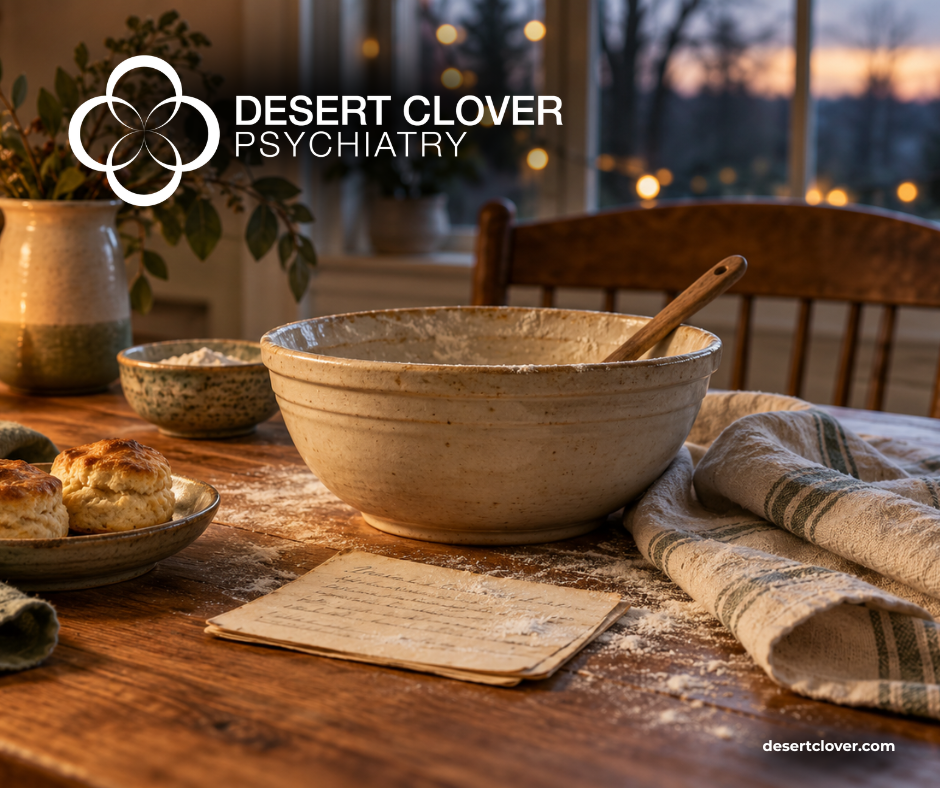
A handwritten recipe can spend most of the year untouched in a kitchen drawer. Then a holiday arrives, and someone unfolds it, recognizes the handwriting, and starts looking for the right bowl. Making the dish becomes a way of remembering who taught them, who used to insist on seconds, and who will be at the table this year. There may be pleasure in that moment, along with a sudden ache. Both belong to the history the recipe carries.
Holidays give this kind of remembering a place in ordinary life. Work, errands, and the next urgent thing can consume our attention for weeks. A recurring celebration gives us an occasion to acknowledge a relationship, a religious commitment, a community, or another year lived. It also gives people a reason to coordinate their time. Affection that usually remains an intention can become a visit, a meal, or an afternoon spent together.
The particular things people do can matter as much as gathering itself. In three studies of holiday experiences, people who reported participating in family rituals also reported greater enjoyment, closeness, and involvement. The findings show an association rather than proving that introducing a ritual would make any family happier. Still, they capture something recognizable. Singing a familiar song or making a particular breakfast gives people a shared activity through which belonging can become tangible. Its significance grows from the people and memories attached to it.
Repetition can also offer a sense of continuity through change. Children grow, homes change, friendships deepen, and families take new shapes. Something familiar may connect the person we are now with earlier versions of ourselves. Research on nostalgia and ritual links meaningful memories, participation in rituals, and a stronger reported sense of meaning. These findings concern people’s experiences of meaning, rather than treatment for a mental health condition. A dish prepared in a different kitchen can still carry an old relationship into a new life.
The Other Side of the Marker: Why Holidays Trigger Distress
The same continuity that anchors us can also make an absence startlingly clear. A holiday may bring back the sound of someone’s voice or the role they always played, making their absence feel immediate. Research involving older adults grieving a spouse found heightened distress around certain meaningful times early in bereavement. The pattern varied with timing and how recently the loss occurred. People’s experiences vary, too. Someone may enjoy a gathering and cry afterward, or prefer a quieter day. Sadness in these moments can be an ordinary part of remembering someone loved.
Belonging can be complicated even without a recent loss. Public celebrations often assume that everyone shares the same traditions, faith, family structure, or enthusiasm. In two laboratory experiments involving Christmas displays, participants’ identities shaped their responses, including how included they felt. Those short-term findings cannot describe an entire holiday season, but they invite a useful question about any gathering. Who gets to feel at home here, and who is being asked to fit someone else’s picture of celebration?
There are practical pressures, too. The person delighted to host may also be exhausted by the work. Gifts can carry financial strain. Travel can disrupt routines that help someone feel steady, while a crowded room may become overwhelming for a person sensitive to noise. Family contact can bring affection, tension, or genuine concerns about safety. Understanding someone’s reluctance requires curiosity about the experience awaiting them. Their enthusiasm for a holiday tells us very little about their gratitude or capacity for connection.
Expectations about emotion can add another burden. When happiness feels compulsory, sadness may acquire a second layer of shame. Research on pressure to avoid negative feelings, conducted outside the holiday context, found that such expectations can amplify negative mood. It offers a reason to be careful with demands to cheer up. A person who can admit that the day is difficult may have more room to participate honestly, without also having to reassure everyone around them.
Holding Both Truths; Making Room for Joy and Grief

Making room for our actual, complex emotional realities can be quite practical. We do not have to abandon celebration to protect those who are hurting, nor should we ignore those who are struggling for the sake of forced cheer.
The goal is simply coexistence, which we can build through small, flexible choices:
A family that values its annual meal might prepare fewer dishes and share the work, giving the usual cook more time at the table.
After a loss, keeping one familiar custom while changing the rest of the day may feel manageable.
Choosing a shorter visit can make participation easier for someone who needs quiet or gets easily overwhelmed by crowded environments.
Someone avoiding an unsafe family gathering can spend time with trusted friends or choose to mark the occasion privately.
These choices deserve consideration on their own terms. People who look forward to the holidays can continue to enjoy them. Making room for another person’s experience does not require giving up the music, food, decorations, or gatherings that make the season meaningful. It asks us to loosen the expectation that everyone must participate in the same way or feel the same things. That flexibility can make it easier to share a celebration with someone whose year has been very different from our own.
Finding Your Footing This Season
Protecting your mental health during the holidays is not an afterthought; it is a priority that needs to stay that way. The key is developing the self-awareness to recognize how a specific season interacts with your mind.
For some people, the holiday stretch is a vital battery charger. The gatherings, visual warmth, and break from daily monotony provide an emotional reserve that carries them through the long, quiet months of January and February when the world turns gray and very little is happening. If the holidays replenish your spirit, embrace that energy.
For others, the calendar shift represents a prolonged period of endurance where routines fall apart and emotional demands spike. If you recognize that the holidays drain you, give yourself permission to step off the cultural conveyor belt. Pacing your commitments, keeping an eye on your physical sleep and hydration, and maintaining clear personal boundaries are practical ways to stay grounded.
A worthwhile holiday can include laughter that surprises us, memories that hurt, and stretches that feel entirely ordinary. Its meaning need not depend on reproducing the past or reaching a particular emotional pitch. The recipe can be made differently this year. There can be a new person at the table, an old story told again, or a quiet acknowledgment of who is missing. The celebration can hold all of it.
References
Cole, S., & Houston, R. (2024). The threads of meaning: Nostalgia, ritual participation, and existential security. Personality and Social Psychology Bulletin. https://doi.org/10.1177/01461672241235740
Bastian, B., Kuppens, P., Hornsey, M. J., Park, J., Koval, P., & Uchida, Y. (2012). Don't worry, be happy: The social pressure to avoid negative feelings amplifies depression. Emotion, 12(1), 19–22. https://doi.org/10.1037/a0024755
Carr, D., & Utz, R. (2013). Late-life bereavement and the psychological consequences of anniversary dates and meaningful holidays. The Journals of Gerontology, Series B: Psychological Sciences and Social Sciences, 68(5), 780–790. https://doi.org/10.1093/geronb/gbt061
Christian, M., & Houlette, M. (2010). Merry Christmas or happy holidays? The emotional and identity consequences of public holiday displays. Journal of Experimental Social Psychology, 46(5), 795–801. https://doi.org/10.1016/j.jesp.2010.05.026
Sezer, O., Norton, M. I., Gino, F., & Vohs, K. D. (2016). Family rituals improve the holidays. Journal of the Association for Consumer Research, 1(4), 509–526. https://doi.org/10.1086/688495
Shear, M. K. (2022). Coexisting with grief during the holidays. Columbia University School of Social Work, Center for Prolonged Grief. https://socialwork.columbia.edu/news/coexisting-grief-during-holidays-0