
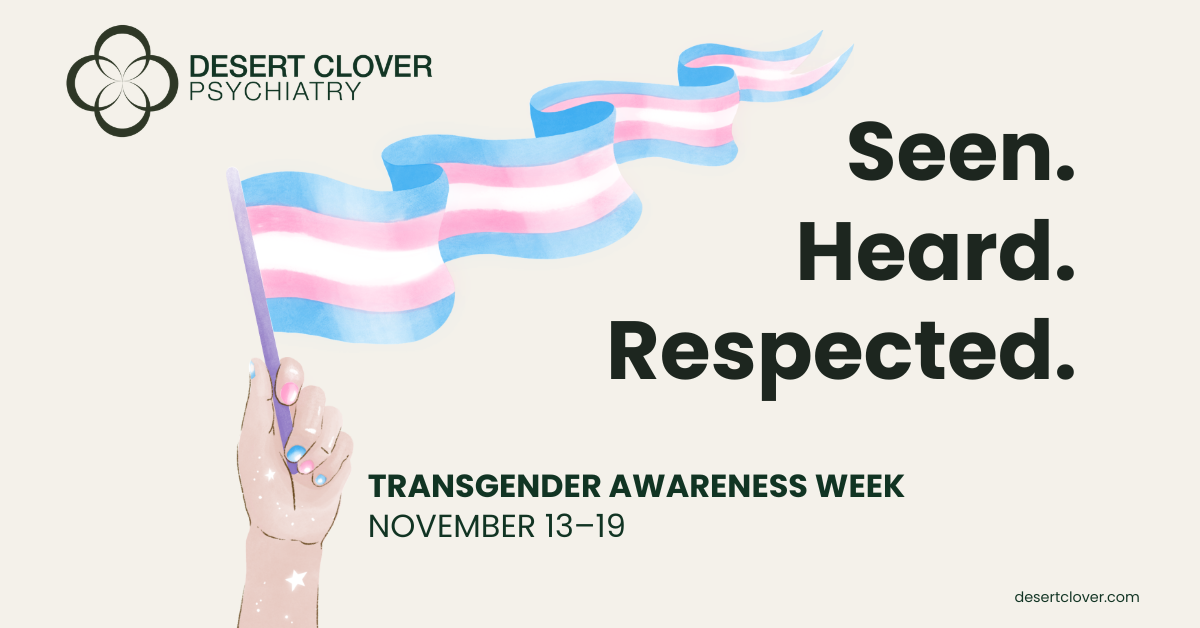
Seeking mental health support can mean sharing things you have never said out loud. It helps to know that the person listening will take your concerns seriously and treat you with respect.
For transgender and nonbinary people, that includes having their identity respected without every conversation becoming a conversation about gender.
During Transgender Awareness Week, November 13–19, we want people to take a closer look at what affirming mental health care can look like in everyday practice. It’s more than a welcoming statement on a website. It includes thoughtful attention to how people are heard, how their information is handled, and what they want from care.
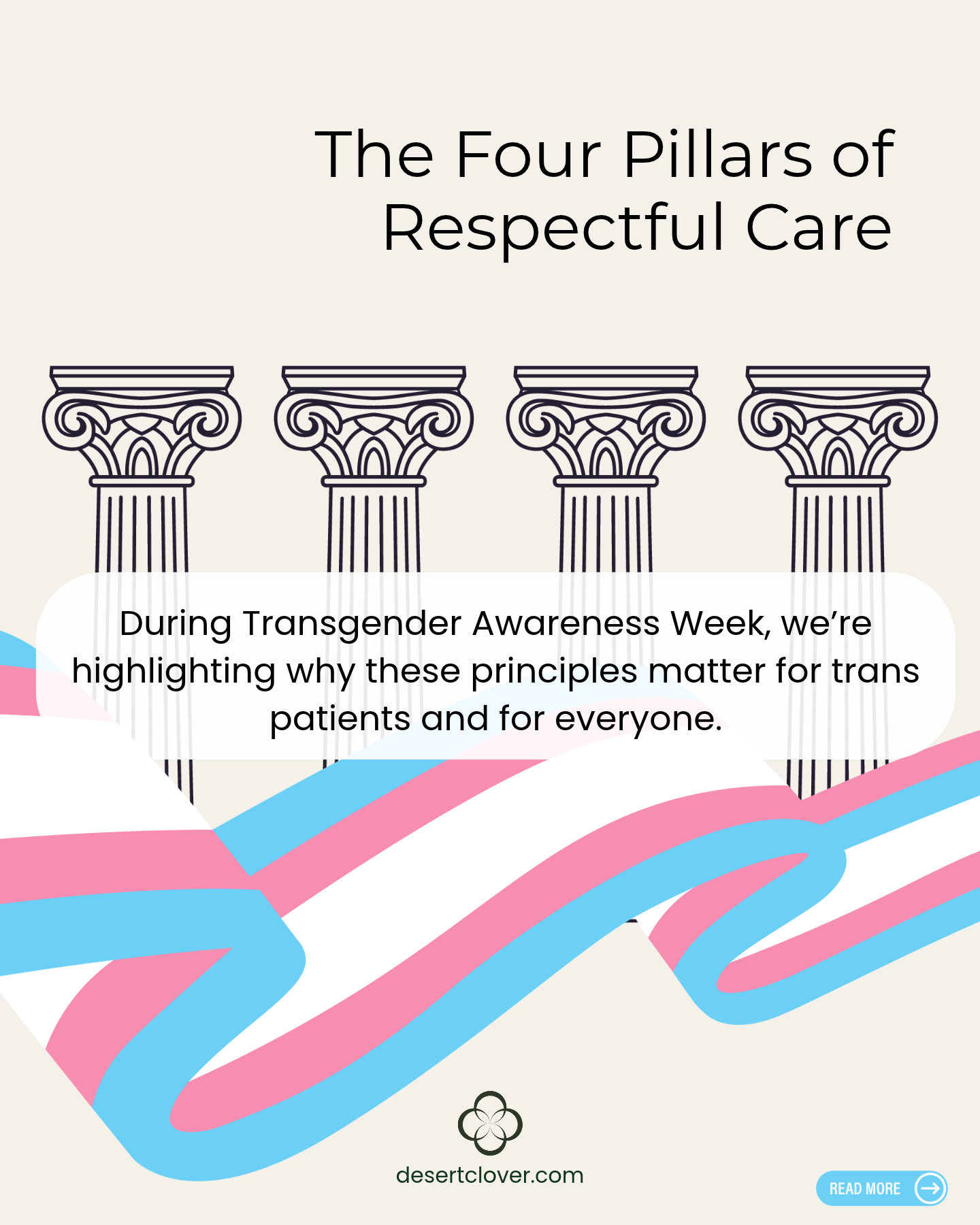
The four pillars of respectful care
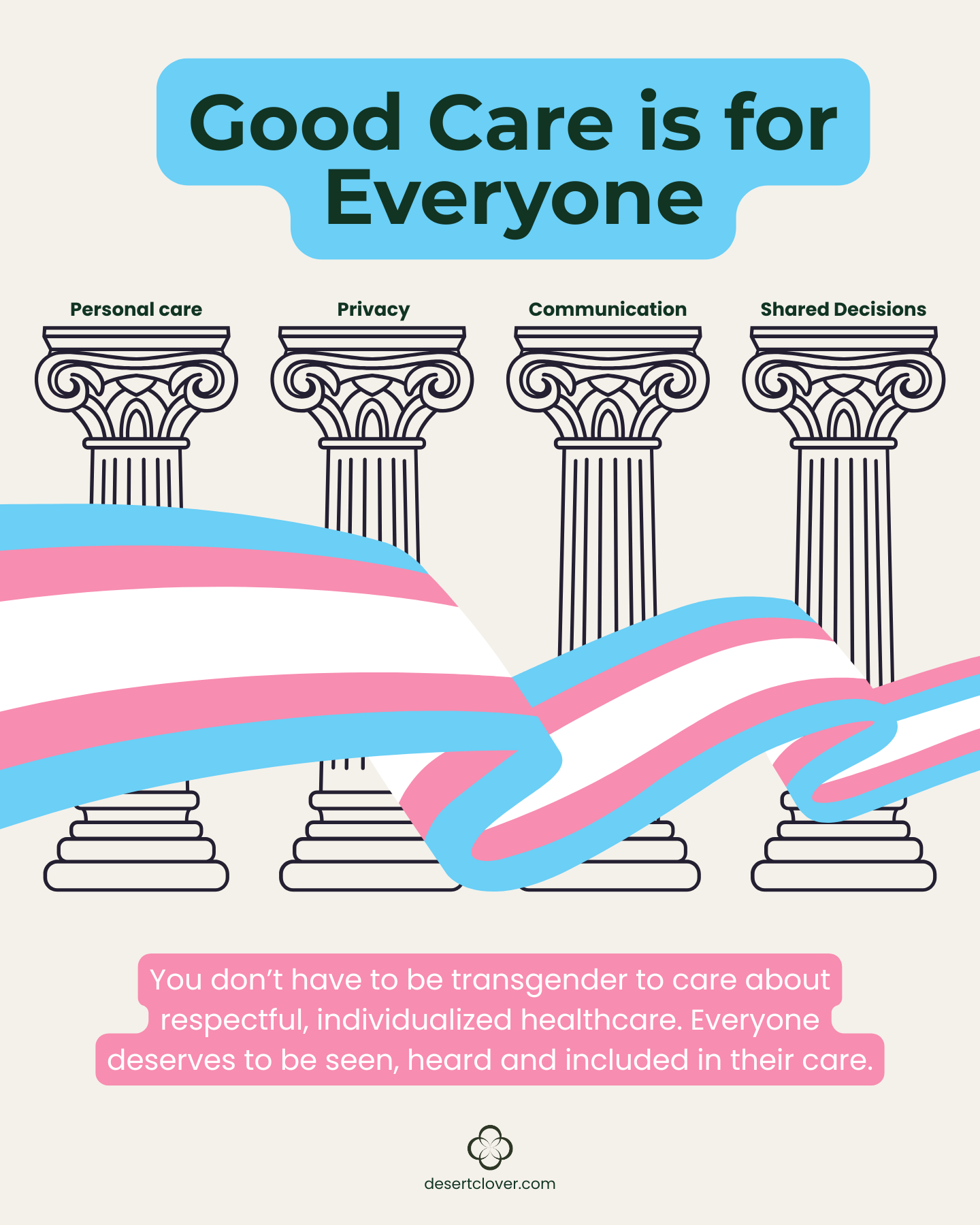
Transgender-inclusive mental health care is built on principles that should matter to every patient. The details of someone’s experience may be different, but the foundation is familiar: care should be personal, private, understandable and collaborative. These four pillars turn a general promise of respect into everyday practice.
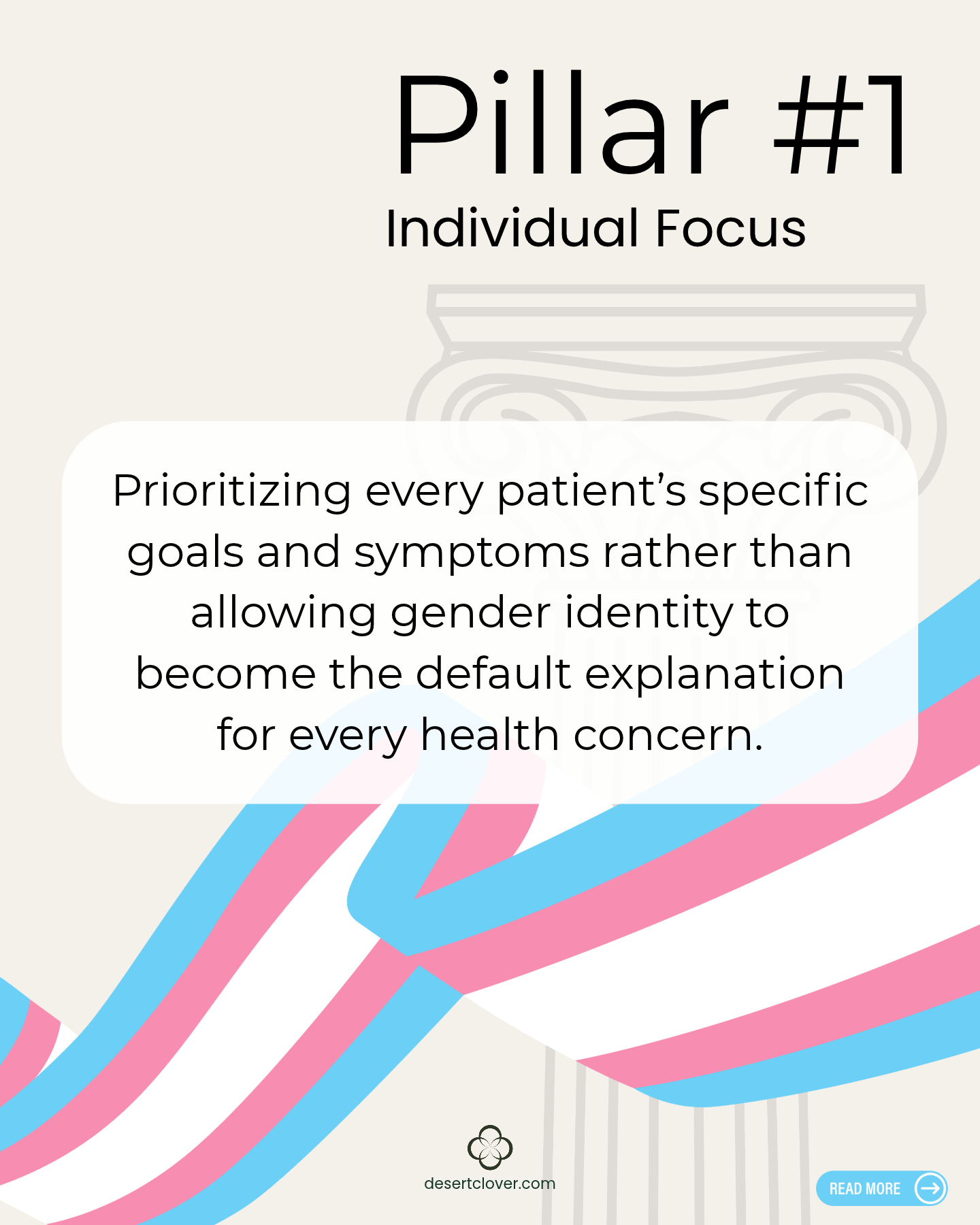
Individual focus means beginning with the person in front of you. A provider should listen to the patient’s specific concerns, symptoms and goals rather than assume that every health concern is related to gender. A transgender person might seek support for anxiety, sleep, relationships or many other reasons. Their identity deserves respect, but it should never replace curiosity about what they actually need.
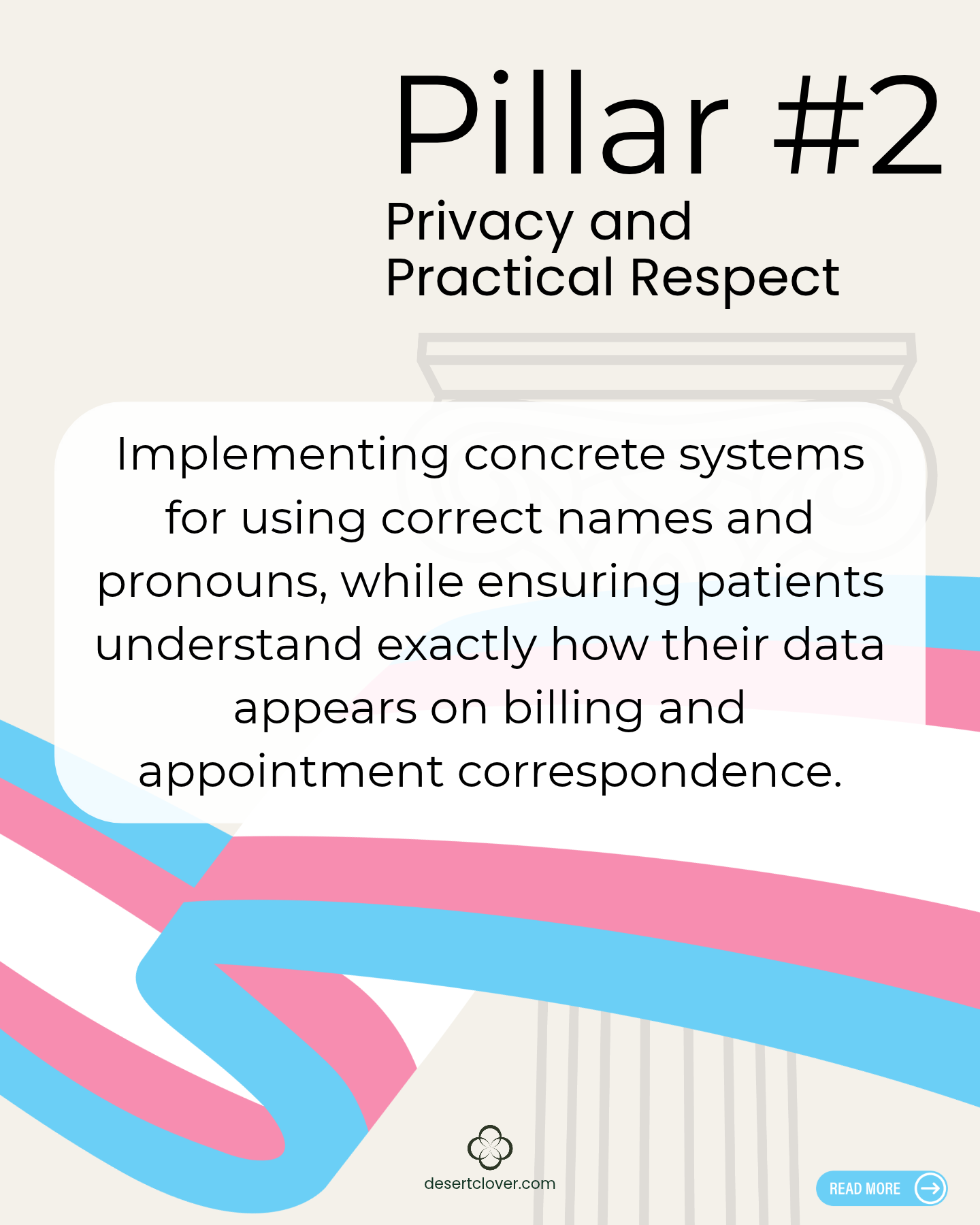
Privacy and practical respect means thinking beyond the exam room. Using a patient’s name and pronouns matters, and so does discussing how information appears in records, reminders, billing and other communications. A patient may feel comfortable sharing information in one setting but not another. Asking what is safe and explaining the limits of confidentiality can help patients make informed choices.
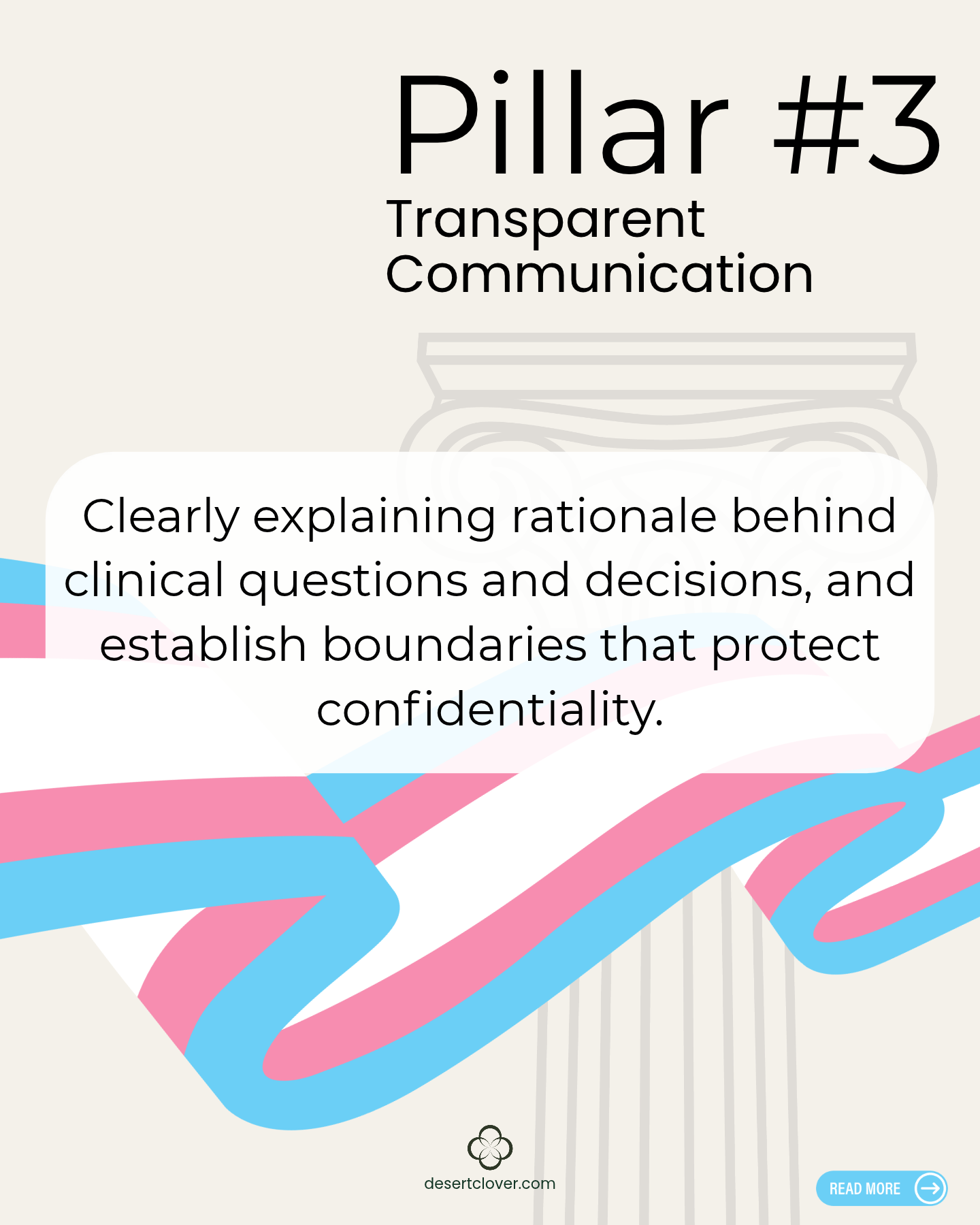
Transparent communication means explaining the purpose behind questions, recommendations and decisions. Patients should understand why a provider is asking for personal information, how it relates to their care and what options are available. They should also feel able to ask questions or request clarification without being made to feel difficult.
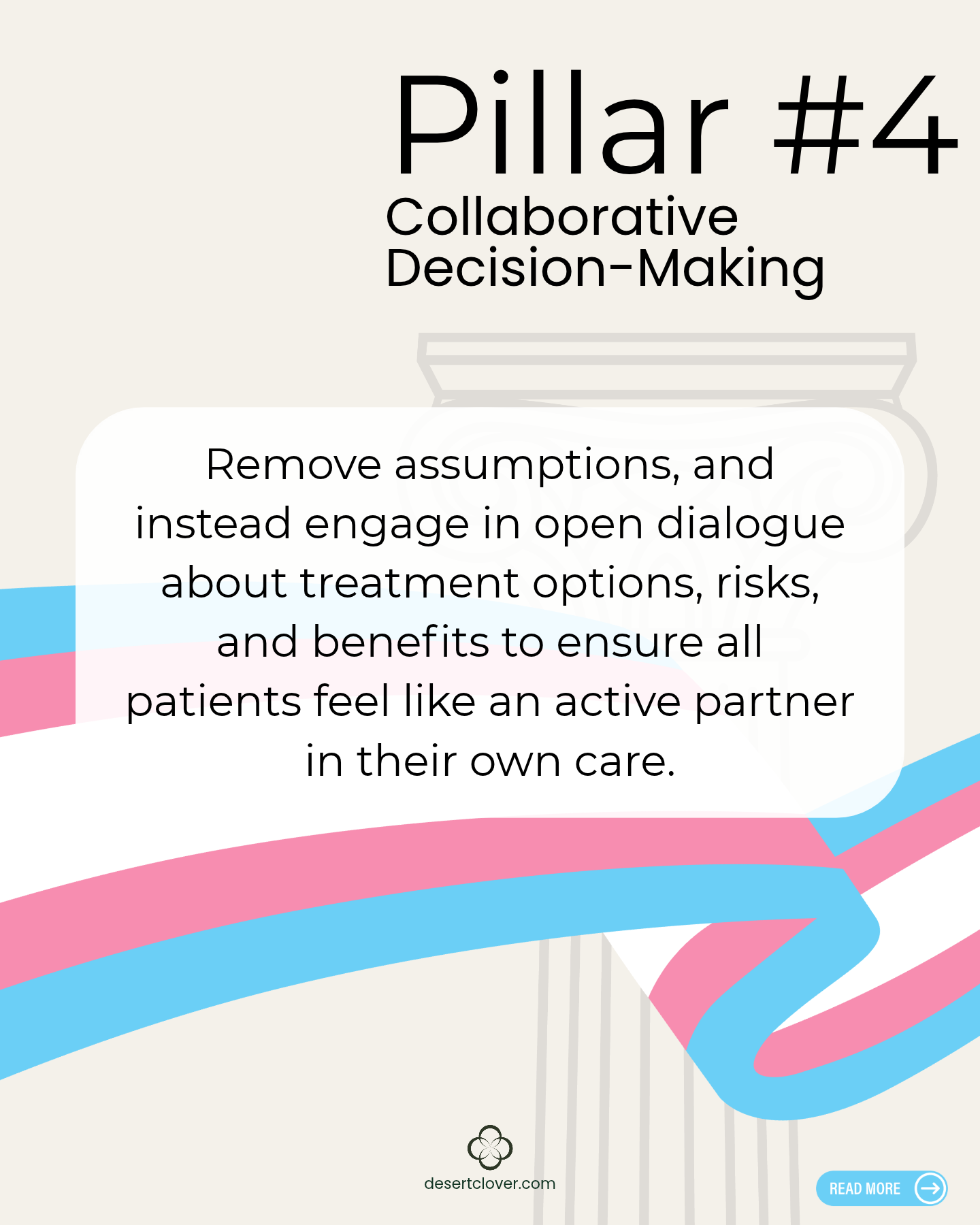
Collaborative decision-making means that patients are active participants in their care. Providers bring clinical knowledge; patients bring knowledge of their own lives, priorities and experiences. Discussing options, potential benefits and risks together helps create a plan that reflects both. These pillars are especially important to name during Transgender Awareness Week, and they are standards every patient should be able to expect.
A person’s identity is not a diagnosis
The American Psychiatric Association makes an important distinction: being transgender is not a psychiatric diagnosis. Some transgender people experience gender dysphoria, which involves distress related to a difference between their gender identity and sex assigned at birth. Others do not.
Transgender people may seek mental health care for the same reasons anyone would, including depression, anxiety, sleep difficulties, relationship concerns or navigating a stressful season of life. And just like anyone, gender may be relevant to those concerns, or it may not be the focus at all.
Good care makes room for that distinction. It starts with an open question: “What would you like help with?”
Understanding the context without making assumptions
Discrimination, rejection and barriers to appropriate healthcare can affect mental health. Recognizing those pressures matters. So does remembering that no single experience represents every transgender person.
An affirming approach leaves space to discuss difficult experiences without assuming someone’s life is defined by hardship. It also makes room for friendships, ambitions, humor, creativity and the ordinary things that make a life meaningful.
A person should not have to choose between having their identity acknowledged and being seen as a whole human being.
What an affirming space looks like
Welcoming artwork and inclusive language can communicate good intentions. The more meaningful test is what happens during an actual interaction.
Names and pronouns are handled thoughtfully
Using someone’s name and pronouns is a practical expression of respect. It is also important to ask where and with whom those details can be used. A person may use a particular name in an appointment but not want it used in a voicemail that other people could hear.
When a mistake happens, a brief apology and correction are usually more helpful than a lengthy explanation that shifts attention away from the person.
Patients should be able to ask how information appears in records, appointment reminders, billing and communications with other people involved in their care.
Rather than promising absolute confidentiality, a practice should explain its privacy policies and any limits clearly. Patients can then make informed choices about what they share and raise concerns about communications that could disclose sensitive information.
Questions have a purpose
A clinician may need to ask about medications, medical history, relationships or other personal matters to understand someone’s health. Explaining why a question is relevant can make a sensitive conversation clearer.
Curiosity alone is not a reason to ask about anyones body or medical history. Patients can ask, “How does this information relate to my care?” That question deserves a thoughtful answer.
Treatment should always center on the individual.
Respectful care does not mean assuming that everyone wants the same treatment or has the same goals.
It means discussing the concern that brought someone in, considering appropriate options, explaining benefits and risks, and making decisions together. Gender identity should not become a shortcut for explaining every symptom or deciding what someone needs.
Questions you can ask before an appointment
You do not need to conduct an interview to deserve respectful treatment. But if you want more information before choosing a practice, these questions can help:
What experience does the clinician have working with transgender and nonbinary patients?
How do you record and use a patient’s name and pronouns?
What information appears in reminders, billing and the patient portal?
How do you handle concerns about privacy or communication?
What services do you provide, and when would you recommend another clinician?
Specific answers are more useful than a general promise that a practice is “welcoming.”
You can also bring a short list of your goals and questions to an appointment. If something feels unclear, asking for an explanation is a reasonable part of participating in your care.

Support matters outside the appointment, too
Friends, family members and coworkers do not need clinical expertise to offer meaningful support.
Start by listening. Ask what would be helpful rather than deciding for someone else. Respect what they choose to keep private. Avoid sharing their identity, photographs or personal experiences without permission.
The UC Davis LGBTQIA Resource Center offers practical guidance on using names and pronouns, respecting boundaries and learning without expecting one person to explain an entire community.
Support can also be wonderfully ordinary: an invitation to dinner, remembering an important milestone or checking in about a new job. Not every supportive conversation needs to be about gender.
Beyond a week of awareness
Transgender Awareness Week takes place November 13–19. It precedes Transgender Day of Remembrance on November 20, an observance honoring transgender people whose lives were lost to anti-transgender violence.
Awareness is just a starting point. The lasting work is in everyday choices: protecting privacy, listening without assumptions and following respectful words with consistent actions.
Everyone deserves to have their mental health concerns taken seriously. Everyone deserves to be seen as more than a label.
At Desert Clover Psychiatry, care begins with an evaluation of your symptoms, treatment history and personal goals. Visit our website to learn about our services or call (602) 492-2121 with questions about whether our care is a fit for your needs.